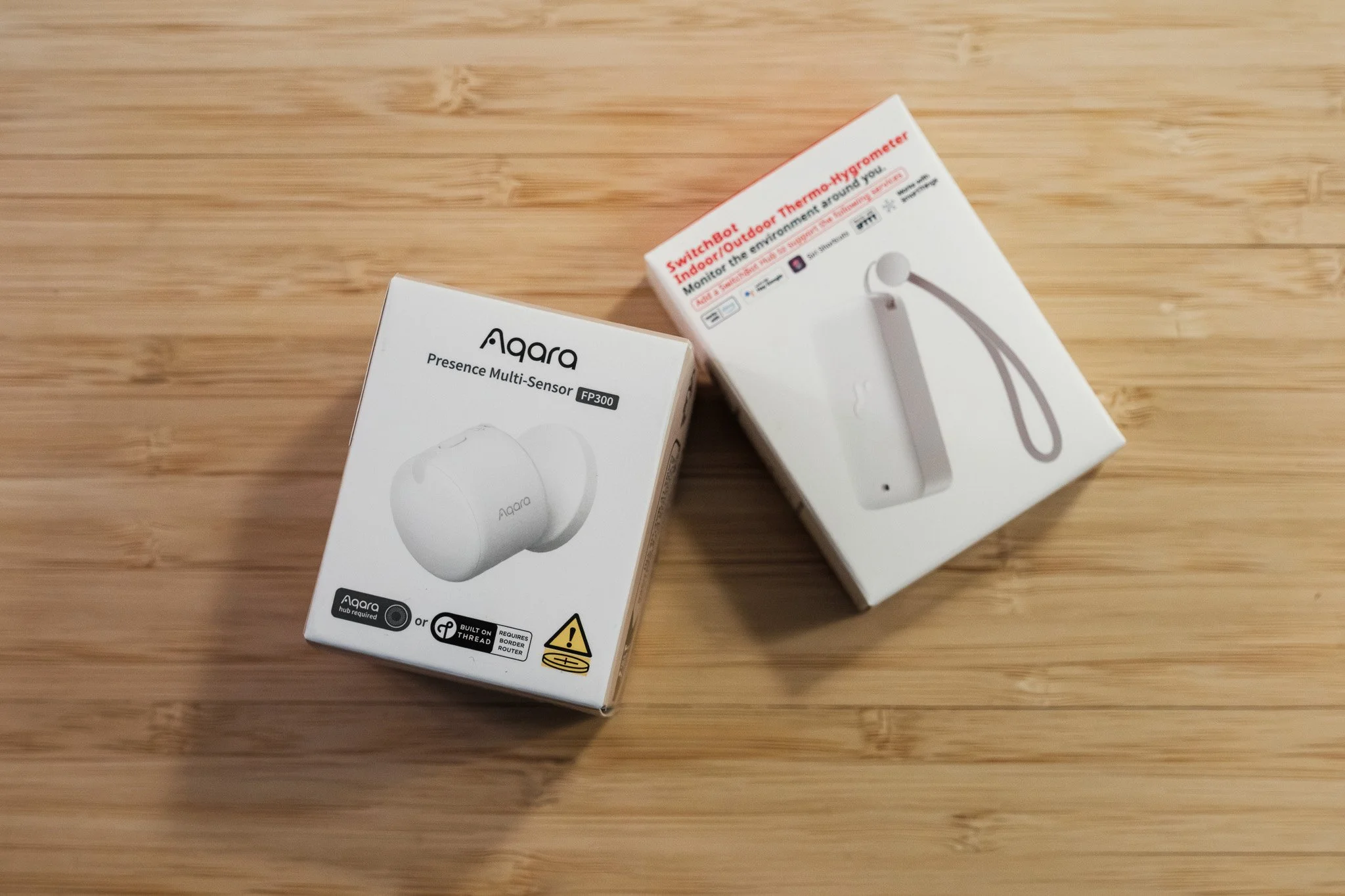
In anticipation of an eventual slow rollout of smart switching and some other odds-and-ends mods, I’ve taken the opportunity to leverage the market availability of high quality and affordable zigbee and bluetooth sensors to make sure I have all the data I need when I start installing switching.
Aqara FP300 - The Golden Standard Presence Sensor
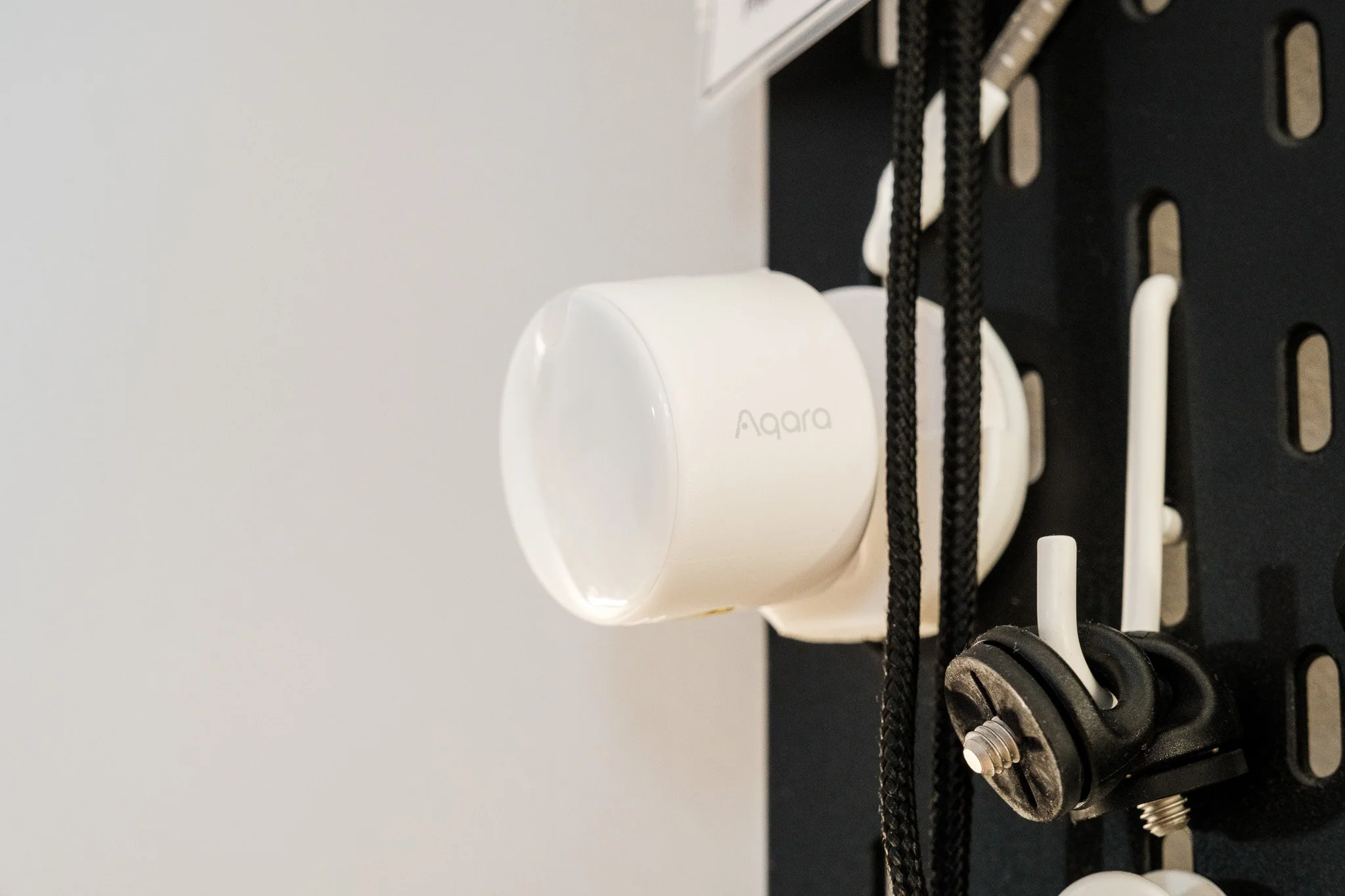
I should have thrown a comparison image here but the black rapid studs hanging next to this are a 1 inch diameter.
This thing is great - Albeit expensive at $70CAD. It’s fully featured:
Zigbee or Thread
Battery powered (3 year battery on Zigbee!)
PIR+60ghz Mmwave - Best combo of low power + detection of micro-movements
Wide detection range and tweakable detection distance
Very fast updates
Built in illuminance, temperature, and humidity sensors
I have a few other presence sensors but they’re just PIR - For triggering stuff like lighting in the kitchen overnight those work fine, but for proper presence detection this thing has been rock solid - It’s been in use in my office for about 2 weeks now and hasn’t skipped a beat. It let me simplify and refine my “lights stay on while in room” automations considerably - No more relying on “Is the Macbook active?” to keep the lights on. It’s not yet mainline ZHA compatible but a custom quirk from the community exposed everything needed to get it working. There’s intention to standardize on this offering for rooms where continued stationary presence needs to be tracked, but I’ll likely just look at a cheaper PIR option with similar environmental sensors for spots like the basement or garage where it’s unlikely someone will be static for an extended time.
Switchbot Bluetooth Thermometer/Hygrometers
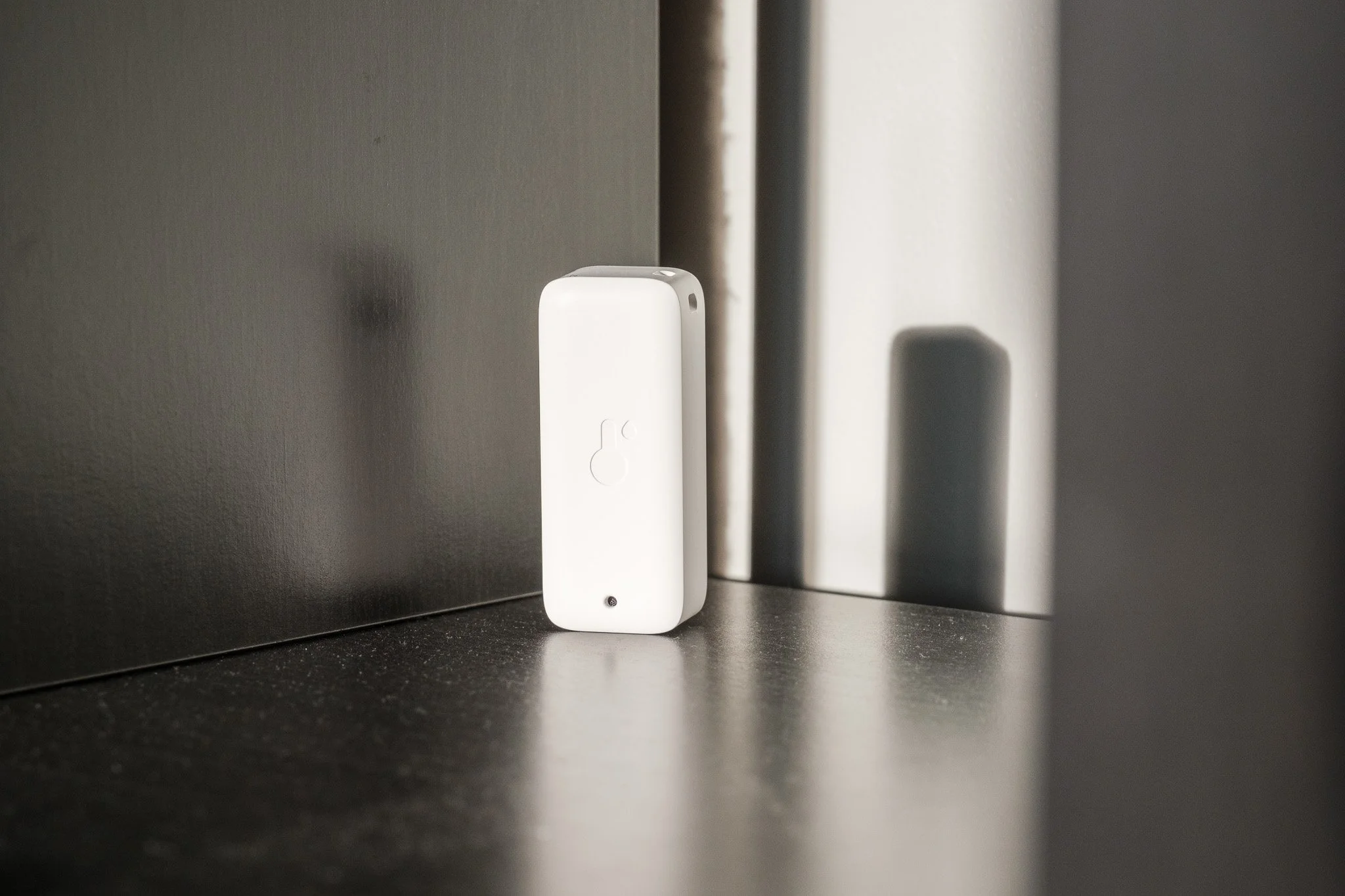
Ignore the dust!
I converted all of my ESPresence sensors over the bluetooth proxies and started running Bermuda for device tracking in home, so it only made sense to extend the sensor options over to Bluetooth. These are super robust little sensors and work great across a variety of scenarios:
Runs on AAA batteries, so easy swap when they’re done.
Long battery life - 2 year rated
IP65 - Great for indoor/outdoor - Tested at -30c temps in a deep freeze for extended periods
Great signal and reporting period
Attractive device - Small and blends in well with almost any room
Adding them was as easy as setting the pairing mode and then adding a device in home assistant. Having one of these in most rooms is going to be key for implementing this in our upstairs ducted HVAC - Being able to use a non-thermostat based reading for a temperature set point should improve the overall comfort - Then there’s advanced use-cases like per-room occupancy and setting temperature averages, etc.
Aqara Zigbee Thermometer/Hygrometers

Stuck in an unassuming place on the wall in the washroom.
Considerably smaller than the Switchbot units these are just a bit bigger than an inch by an inch. I run these in the two upstairs washrooms and use them with a decently complex automation to automatically throw the HRV in the house on high speed until the washrooms hit humidity bordering on a 2 hour mean. Tiny, more expensive than the Switchbot units, but easy to stick next to a vent on the wall or out of the way. I think whenever we do washroom renovations I’ll be looking for smart switches with these features built in - Just to reduce clutter.
Aqara Zigbee Contact Sensors
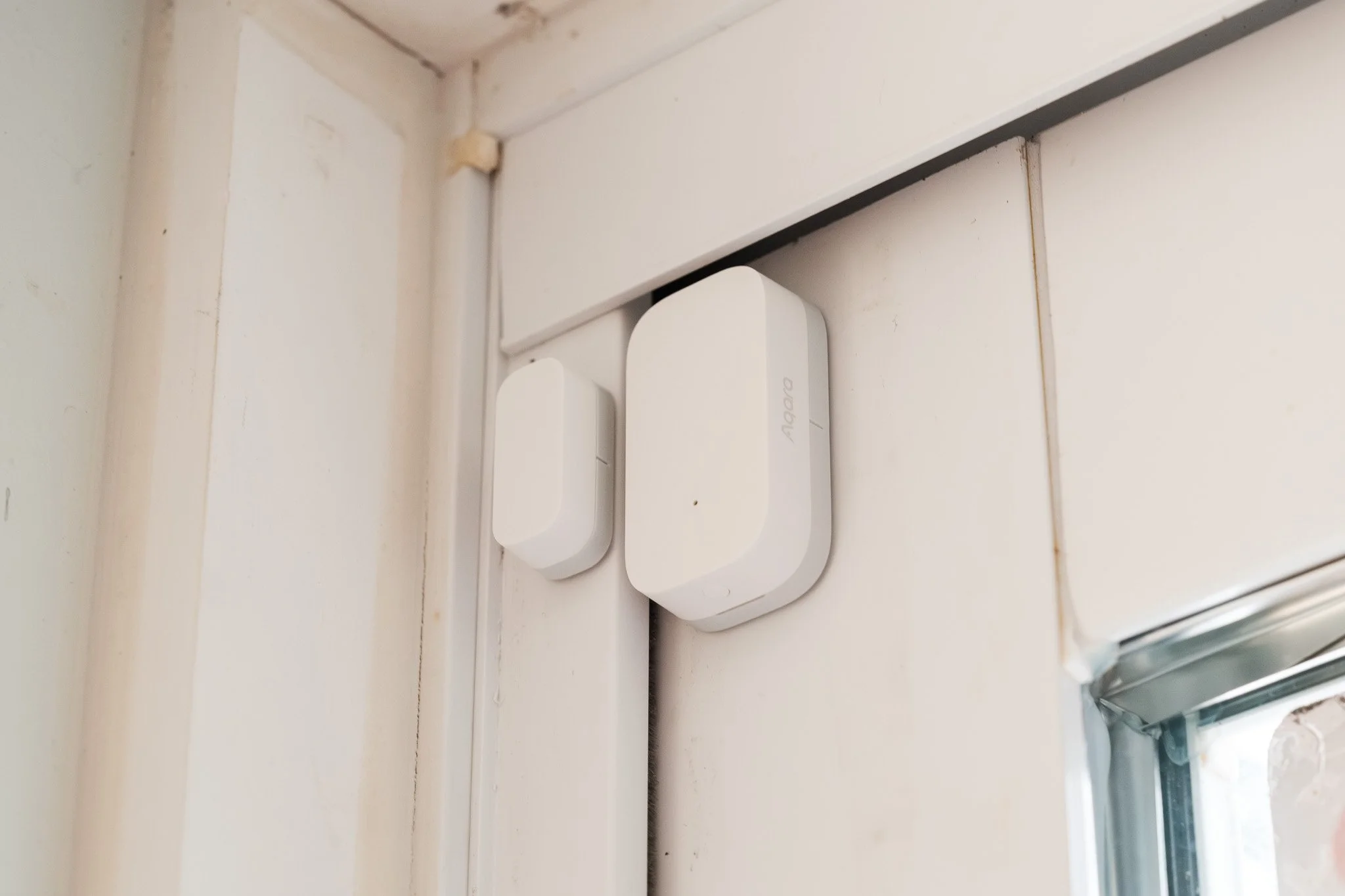
These things are tiny! And really quick to respond, like almost instant. I was on the fence about repurposing an existing security panel at home, but the attached devices were so very limited and I didn’t want to get into replacing the parts necessary to get it working. Just the door sensors alone were more than 4x as large! I’ve got open door notifications setup for these right now, but some will be used to automate smart lighting in the hallway/basement in combination with a decent PIR sensor.
Next Sensors
I have two leads in the hallway and kitchen that run to the basement on pretty standard low voltage 22awg wiring - These lead to the box the old Vista 15P was in, so I plan on leveraging these for powering some PIR/Illuminance sensors for those spaces - I’m not 100% sure what exactly what sensors I’ll be using but I should be able to just wire these direct to the 12v adapter down there then throw a buck converter at the sensor side. a 3D printed housing would easily hide everything on the sensor side. Stay tuned for that one.